
Flight attendants play an essential role in ensuring safety, comfort, and order during air travel. While passengers often see them as providers of snacks and refreshments, their responsibilities go far beyond these tasks. They are highly trained safety professionals who follow strict protocols to handle emergencies and protect everyone on board. One behavior that frequently captures passengers’ curiosity is the habit of flight attendants keeping their hands behind their backs during takeoff and landing.
At first glance, this posture may seem formal or even unnecessary, but it serves a crucial safety purpose. Henny Lim, a flight attendant with Cebu Pacific, explained in a viral TikTok video that the stance is not arbitrary. Every aspect of their body language during takeoff and landing is carefully planned and serves a specific purpose. The stance involves standing upright with feet planted firmly on the ground, shoulders squared, and hands clasped behind the back. This position allows flight attendants to remain alert, balanced, and ready to react swiftly in case of an emergency.
One of the main reasons flight attendants adopt this posture is to discreetly count passengers. Often hidden from view in their clasped hands is a small clicker, which allows them to count and verify that the number of passengers matches the manifest. This ensures that everyone is accounted for before the plane begins the most critical phases of flight. Additionally, keeping their hands behind their backs prevents any distraction and allows them to maintain focus on their surroundings.
Beyond counting passengers, the posture also ensures preparedness. By keeping their hands free and behind their backs, flight attendants can react quickly to unexpected situations. Whether it’s assisting a passenger, opening an emergency exit, or grabbing safety equipment, this stance prevents fumbling or hesitation in critical moments. Takeoff and landing are statistically the riskiest phases of any flight, making preparedness during these moments absolutely essential.
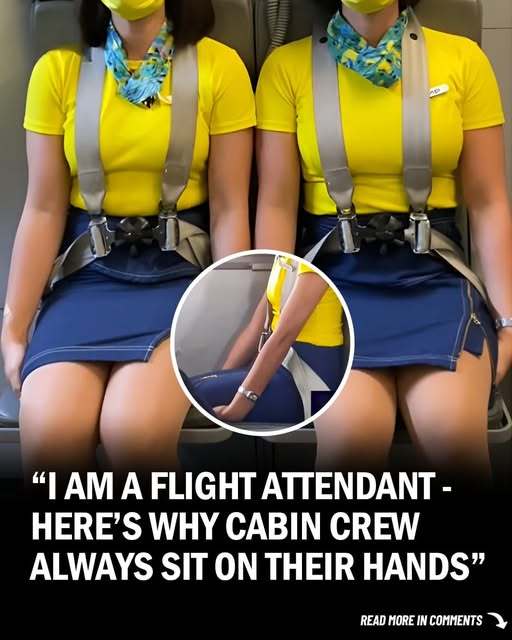
Once seated in their designated jump seats, flight attendants adopt another vital protocol: the bracing position. This involves fastening their seatbelts tightly, sitting upright, placing their hands on their thighs with thumbs tucked in, and keeping their feet firmly on the floor. The purpose of the bracing position is to minimize body movement during sudden impact and reduce the risk of flailing limbs, which can cause severe injuries. Additionally, this position helps protect vital organs and decreases the severity of secondary impact injuries.
During this time, flight attendants also engage in what is known as a “silent review.” This is a mental exercise where they rehearse emergency procedures, review evacuation commands, and mentally prepare themselves for possible scenarios. They also remain hyper-aware of their surroundings, observing visual cues outside the aircraft that could indicate a problem.
Regulatory agencies like the Federal Aviation Administration (FAA) underscore the importance of these safety measures. FAA guidelines highlight two primary goals of the bracing stance: minimizing flailing during impact and reducing injuries caused by secondary contact with hard surfaces. By pre-positioning their bodies correctly, flight attendants can better protect themselves while remaining capable of assisting passengers in an emergency.


0 Comments